
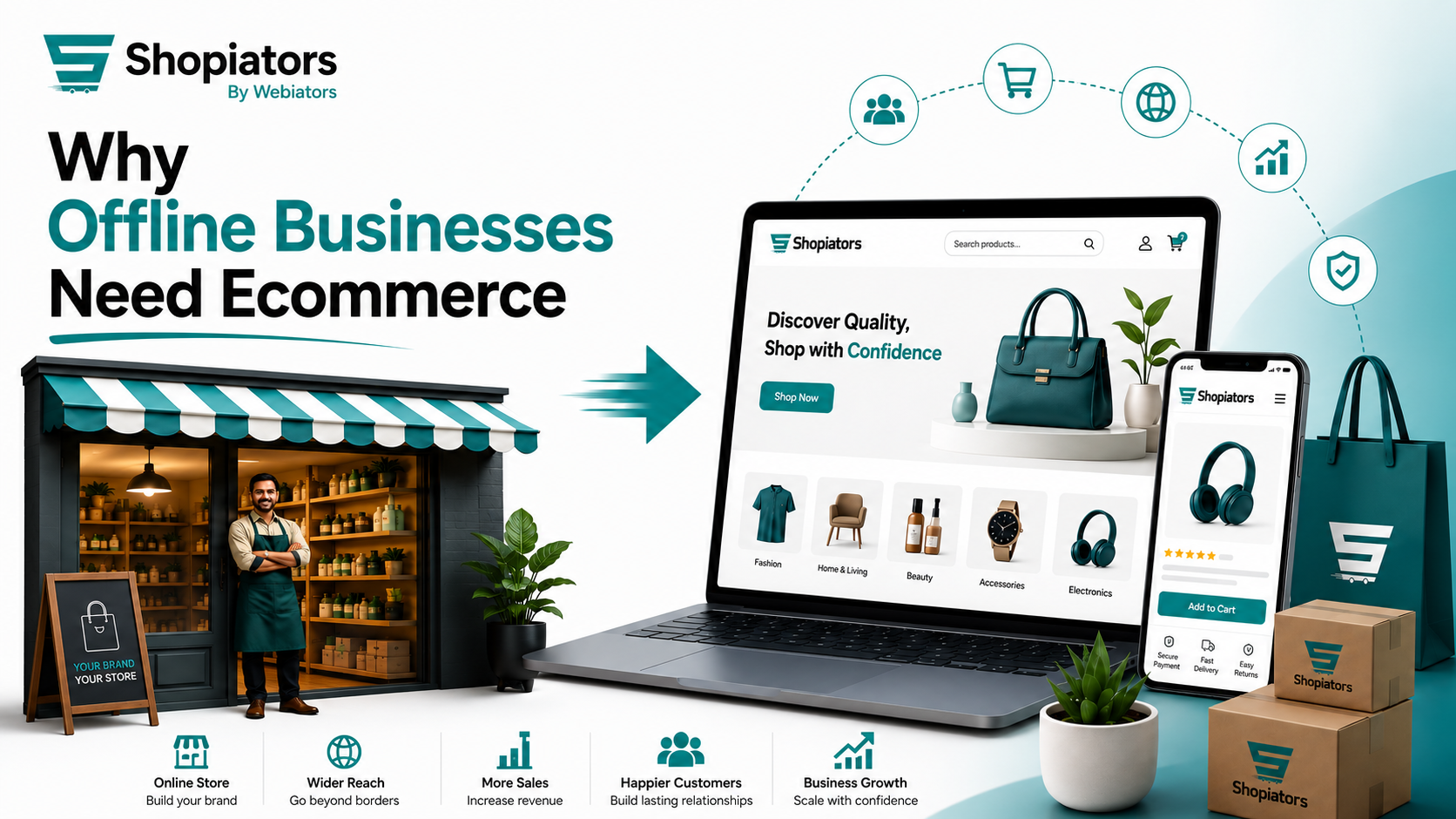
If your store is still doing well because of loyal customers, that’s worth celebrating. But here’s a question I often ask business owners:
What happens when someone who has never heard of your business searches for your product online?
If they can’t find you, they usually find your competitor.
That isn’t because your products are better or worse. It’s because buying habits have changed. People discover brands online long before they decide where to spend their money. Even customers who eventually visit a physical store often start with a Google search, social media recommendation, or online review. Research continues to show that online and offline shopping now work together rather than replacing one another.
Going from an offline to online business is no longer about following a trend. It’s about making your business easier to find, easier to trust, and easier to buy from.
Why Should Offline Businesses Go Online?
Years ago, a good location was enough.
Today, visibility matters just as much as location.
Whether you own a clothing boutique, electronics store, furniture showroom, grocery business, or specialty retail shop, your customers expect to find information online before they make a purchase.
Here’s what usually happens:
- They search for a product.
- They compare prices.
- They read reviews.
- They check delivery options.
- They visit the business that gives them confidence.
If your business isn’t part of that journey, you’re invisible to many potential customers.
That’s why ecommerce has become an extension of the physical store instead of a replacement.
The Biggest Benefits of Ecommerce for Retail Stores
Your Store Never Closes
A physical shop has working hours.
An ecommerce website works around the clock.
Someone can discover your products during lunch, place an order at midnight, or browse your catalog while traveling.
You continue generating opportunities even when your storefront lights are off.
Reach Customers Beyond Your Neighborhood
Most offline businesses depend on local foot traffic.
An online store removes that limitation.
Instead of selling only within your city, you can reach customers across your state, country, or even internationally, depending on your products and logistics. Ecommerce platforms make this expansion far more practical than opening multiple physical locations.
Build Trust Before Customers Visit
Think about your own shopping habits.
Would you walk into an unfamiliar store without checking reviews?
Probably not.
Customers look for:
- Product photos
- Reviews
- Business information
- Return policies
- Contact details
A professional ecommerce website answers those questions before customers ask them.
Understand Customer Behavior
Offline stores rely on observation.
Online stores provide data.
You can learn:
- Which products attract the most visitors
- Which pages generate sales
- Where customers leave the buying process
- Which marketing campaigns produce revenue
That information helps you make smarter business decisions instead of relying on guesswork.
Create Multiple Sales Channels
Your ecommerce website becomes the foundation for selling through:
- Google Shopping
- Email marketing
- Online advertising
Instead of depending on one source of customers, you create several.
Is Ecommerce Important for Small Businesses?
Absolutely.
In fact, smaller businesses often gain the most.
Large retailers already have brand recognition.
Small businesses need visibility.
An ecommerce store allows a neighborhood business to compete on product quality, customer service, and convenience rather than physical size.
I’ve seen family-owned businesses transform simply because customers finally had an easy way to discover them online.
Many people still believe ecommerce is only for national brands.
It isn’t.
It’s for any business that wants to make buying easier.
Common Signs Your Offline Business Needs to Go Online
Not sure whether it’s time?
Ask yourself these questions.
- Customers frequently ask whether you have a website.
- Most inquiries come through phone calls.
- People request online payments.
- You depend heavily on walk-in traffic.
- Competitors appear on Google while your business doesn’t.
- Your inventory isn’t visible online.
If you answered “yes” to more than two of these, your business is already experiencing the limits of being offline.
How Offline Stores Can Start Ecommerce
Many business owners assume ecommerce requires a massive investment.
It doesn’t.
The smartest approach is to build gradually.
Step 1: Choose the Right Ecommerce Platform
Your platform becomes the backbone of your online business.
Look for features like:
- Mobile-friendly design
- Secure checkout
- Inventory management
- Payment gateway integration
- SEO capabilities
- Easy product management
If you’re comparing solutions, exploring a Best Ecommerce Website Builder can help you understand which platform matches your business goals. Modern platforms also include AI Ecommerce Website Builder features that simplify store setup and content creation.
Step 2: Organize Your Product Catalog
Your website is only as good as the information you provide.
Before launching, prepare:
- High-quality product images
- Clear product descriptions
- Accurate pricing
- Stock availability
- Product categories
Customers can’t ask questions the way they would in a physical store, so your product pages need to answer them upfront.
A well-organized catalog also makes it easier for search engines to understand and index your products.
Step 3: Offer Trusted Payment Options
One of the biggest reasons shoppers abandon their carts is uncertainty during checkout.
Keep the process simple by offering popular payment methods such as:
Credit and debit cards
UPI
Digital wallets
Net banking
Buy Now, Pay Later options where appropriate
The fewer obstacles customers face, the more likely they are to complete their purchase.
Step 4: Plan Shipping and Returns
Fast delivery attracts customers.
Transparent return policies earn their trust.
Before accepting orders, decide:
- Where you’ll deliver
- Shipping charges
- Estimated delivery timelines
- Return and refund policies
- Customer support process
Clear communication reduces confusion and builds confidence in your brand.
Step 5: Help Customers Find You
Launching a website doesn’t automatically bring visitors.
Your ecommerce store needs visibility through multiple channels, including:
- Search engine optimization (SEO)
- Google Business Profile
- Email marketing
- Social media
- Paid advertising
- Content marketing
These channels work together to bring qualified traffic to your online store over time.
Step 6: Keep Improving After Launch
Launching isn’t the finish line.
It’s the starting point.
Track key metrics like:
- Website traffic
- Conversion rate
- Average order value
- Returning customers
- Best-selling products
- Cart abandonment rate
Small improvements made consistently often lead to significant growth over time.
Common Mistakes Businesses Make When Moving Online
Going digital isn’t difficult, but rushing the process can create unnecessary setbacks.
Here are a few mistakes worth avoiding:
Treating the Website Like a Digital Brochure
Many businesses upload basic contact information and expect customers to buy.
An ecommerce website should help visitors explore products, compare options, and complete purchases with ease.
Ignoring Mobile Users
Most shoppers browse on their phones.
If your store loads slowly or is difficult to navigate on mobile devices, potential customers may leave before viewing your products.
Poor Product Photos
Customers can’t touch or inspect products online.
Clear, professional images reduce uncertainty and increase purchase confidence.
Complicated Checkout
Every extra step creates friction.
A simple checkout process often converts better than one filled with unnecessary forms and distractions.
Forgetting Customer Support
Questions don’t disappear just because you’re selling online.
Quick responses through email, live chat, or messaging apps reassure customers and improve the overall shopping experience.
Why the Future Belongs to Omnichannel Businesses
Successful retailers no longer think in terms of “offline versus online.”
They combine both.
A customer might discover your products on Google, browse your website, visit your physical store to see the product, and later place another order online.
That’s an omnichannel experience.
It gives customers the flexibility to shop the way they prefer while strengthening your relationship with them.
Rather than replacing your physical store, ecommerce expands its reach and creates more opportunities to sell.
Choosing the Right Ecommerce Platform Matters
Technology shouldn’t become another challenge for your business.
A good ecommerce platform helps you manage products, inventory, payments, orders, customers, and marketing from one place.
If you’re exploring an Ecommerce Platform India, focus on solutions that are easy to scale, support modern integrations, and provide the flexibility to grow alongside your business instead of limiting it.
The right platform lets you spend less time managing technology and more time serving your customers.
Final Thoughts
Building an online store isn’t about abandoning your physical business.
It’s about making your business available wherever your customers choose to shop.
Consumer expectations have changed. People want convenience, transparency, and the ability to interact with brands on their own terms. Businesses that adapt are better positioned to attract new customers, strengthen existing relationships, and create sustainable growth.
If you’re planning to move from an offline to online business, don’t wait until declining foot traffic forces the decision. Start with a clear strategy, choose the right ecommerce platform, and build an experience that reflects the quality you’ve already established offline.
The sooner customers can find you online, the sooner your business can start growing beyond the limits of a single location.
FAQs
- Why should offline businesses go online?
Moving online helps businesses reach more customers, generate sales beyond store hours, improve brand visibility, and provide a convenient shopping experience. It also allows businesses to use digital marketing and customer insights to support long-term growth.
- Is ecommerce important for small businesses?
Yes. Ecommerce gives small businesses an opportunity to compete with larger brands by expanding their reach, showcasing products online, and making purchasing easier for customers without requiring multiple physical locations.
- How can an offline store start selling online?
Start by selecting a reliable ecommerce platform, organizing your product catalog, setting up secure payment methods, planning shipping and returns, and promoting your store through SEO, social media, and email marketing.
- What are the biggest benefits of ecommerce for retail stores?
Some of the biggest benefits include 24/7 sales opportunities, access to a larger customer base, improved customer convenience, better inventory management, valuable business insights, and the ability to sell across multiple digital channels.
- Can a physical store and an ecommerce website work together?
Absolutely. Combining offline and online sales creates an omnichannel experience where customers can discover products online, visit the physical store if needed, and purchase through whichever channel is most convenient. This approach improves customer satisfaction and supports long-term business growth.

Yogesh
Yogesh Khasturi is the Founder of Webiators Technologies and Shopiators. With 10+ years of experience in ecommerce, Shopify, Magento, SEO, CRO, and AI-powered commerce solutions, he has helped businesses worldwide build, optimize, and scale successful online stores. He regularly shares practical insights on ecommerce growth, AI search optimization (GEO), digital commerce trends, and online business strategy.