
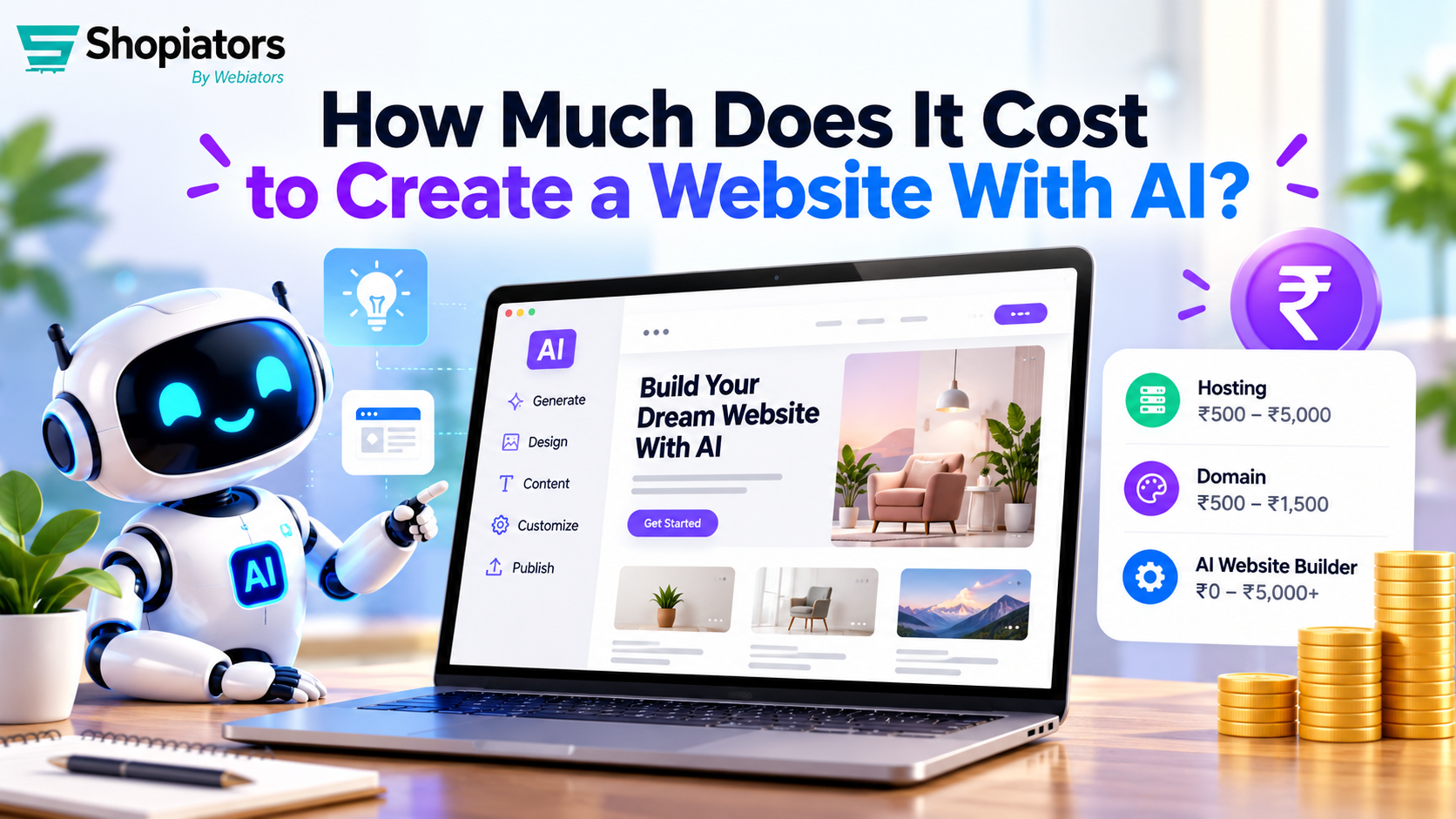
An AI-built website can save you time and development costs, but the wrong platform can quietly drain your budget through subscriptions, paid apps, and transaction fees. If you want to launch an online store, knowing how much cost to create a website means looking beyond the initial setup.
You need to account for the tools required to sell products, process payments, manage orders, and attract customers. The right AI platform can make this process simpler without forcing you to pay for features your business does not need.
How Much Does an AI-Built Website Cost?
The price depends on what you want your website to do. A simple business website needs fewer features than an online store with product listings, checkout, shipping, and inventory management.
Use these figures as initial budgeting estimates, not guaranteed market prices.
| Website Type | Estimated Cost |
| Basic website using a free builder | $0 to $100 initially |
| DIY business website | $100 to $600 per year |
| Small ecommerce website | $200 to $1,500 per year |
| Custom ecommerce website | $2,000 to $15,000+ initially |
Your actual expenses will depend on the platform, customization, integrations, and ongoing services.
Consider a small home decor business selling 25 products. It may need a mobile-friendly storefront, product pages, payment processing, and shipping settings. A larger business with thousands of products may require advanced inventory tools and additional integrations.
Budget for running your store, not just getting it online.
What Determines the Cost of an AI Website?
AI can generate layouts, suggest product descriptions, and speed up website creation. However, several costs still deserve attention.
1. AI Website Builder Subscription
Free plans are useful for testing an idea, but ecommerce features often require a paid subscription. Check whether your plan includes product management, checkout, a custom domain, and the integrations you need.
A low starting price means little if essential features cost extra.
2. Domain and Hosting
Your domain is your store’s online address. Hosting keeps your website accessible to visitors.
Some ecommerce platforms include hosting in their subscriptions, while domain registration and renewal may be separate expenses. Check renewal rates before accepting an introductory offer.
3. Design and Customization
AI can create a starting layout, but your store still needs accurate product information, clear navigation, and useful images.
A standard theme may be enough for a small clothing brand. A business selling personalized furniture or customized gifts might need additional functionality, which could increase development costs.
4. Payments, Shipping, and Apps
Payment providers may charge processing fees, and some platforms apply additional transaction fees depending on the plan and payment method.
Shipping integrations, inventory management, email marketing, and customer support tools can also add recurring expenses. Choose tools that solve actual problems rather than installing every available app.
5. Maintenance and Marketing
Your work does not end at launch. Product updates, performance improvements, SEO, and customer acquisition all require time or money.
A beautiful website cannot generate sales on its own. Keep some budget available for reaching the people most likely to buy from you.
AI Website Builder vs. Traditional Development
| Factor | AI Website Builder | Traditional Development |
| Setup time | Generally faster | Usually longer |
| Technical skills | Minimal for standard stores | Developer support may be needed |
| Customization | Depends on platform capabilities | Greater flexibility |
| Initial investment | Often lower | Can be substantially higher |
| Best suited for | Startups and standard ecommerce stores | Complex, specialized projects |
For many new businesses, an AI-powered ecommerce platform offers a sensible starting point. You can launch with essential features, understand customer behavior, and invest in advanced functionality when your business needs it.
How to Keep Your Website Budget Under Control
Small decisions can make a noticeable difference to your total spending.
- Choose an all-in-one platform: Reduce dependence on separate services for hosting and store management.
- Use AI for repetitive work: Generate first drafts of product descriptions and website content, then check them for accuracy.
- Limit paid apps: Add tools when they provide a clear business benefit.
- Compare renewal prices: Calculate the ongoing cost, not just the introductory offer.
- Plan for growth: Choose a platform that can handle more products and orders without requiring a complete rebuild.
If you are researching the Best Shopify alternative India, compare the total cost of ownership alongside the features. Local payment options, shipping support, GST-related workflows, and ease of store management can be just as important as the subscription price.
Is an AI Ecommerce Platform Worth It for Indian Businesses?
For entrepreneurs who want to sell online without depending on developers for routine changes, it can be a practical choice.
An AI ecommerce platform India businesses choose should simplify storefront creation, product management, order handling, and payment configuration. Shopiators follows this approach by combining AI-assisted store creation with tools for managing everyday ecommerce operations.
If you are looking for an AI online store builder with Shopify-like functionality, compare the available features, pricing, and support before committing. It is also worth exploring if you need an Ecommerce platform for beginners or are researching How to start online store in India.
Focus on what you need to sell successfully today, with enough flexibility to accommodate tomorrow’s growth.
Final Thoughts
Building an online store should not mean spending your entire budget before your first sale.
Identify your essential features, calculate recurring expenses, and compare platforms based on what they offer for the price. The best solution is one that makes launching easier, keeps everyday management manageable, and gives your business room to grow.
Read Also: Which Is the Best Ecommerce Platform: 2026 Guide
Frequently Asked Questions
- Can I create a website with AI for free?
Yes. Some platforms offer free plans, although ecommerce features, custom domains, and integrations may require payment.
- How much does an AI ecommerce website cost?
A small DIY store may cost a few hundred to around $1,500 annually, depending on the platform and features. Custom development can cost considerably more.
- Can AI build an online store without coding?
Yes. Many platforms offer visual editors and AI-assisted setup tools that let you manage products and orders without writing code.
- Is an AI website builder cheaper than hiring a developer?
For standard websites and online stores, it can reduce initial development costs. Complex integrations or specialized functionality may still require professional assistance.
- What should I check before choosing an AI website builder?
Compare subscription and renewal prices, payment processing fees, shipping integrations, SEO features, customer support, and options for future growth.

Yogesh
Yogesh Khasturi is the Founder of Webiators Technologies and Shopiators. With 10+ years of experience in ecommerce, Shopify, Magento, SEO, CRO, and AI-powered commerce solutions, he has helped businesses worldwide build, optimize, and scale successful online stores. He regularly shares practical insights on ecommerce growth, AI search optimization (GEO), digital commerce trends, and online business strategy.