
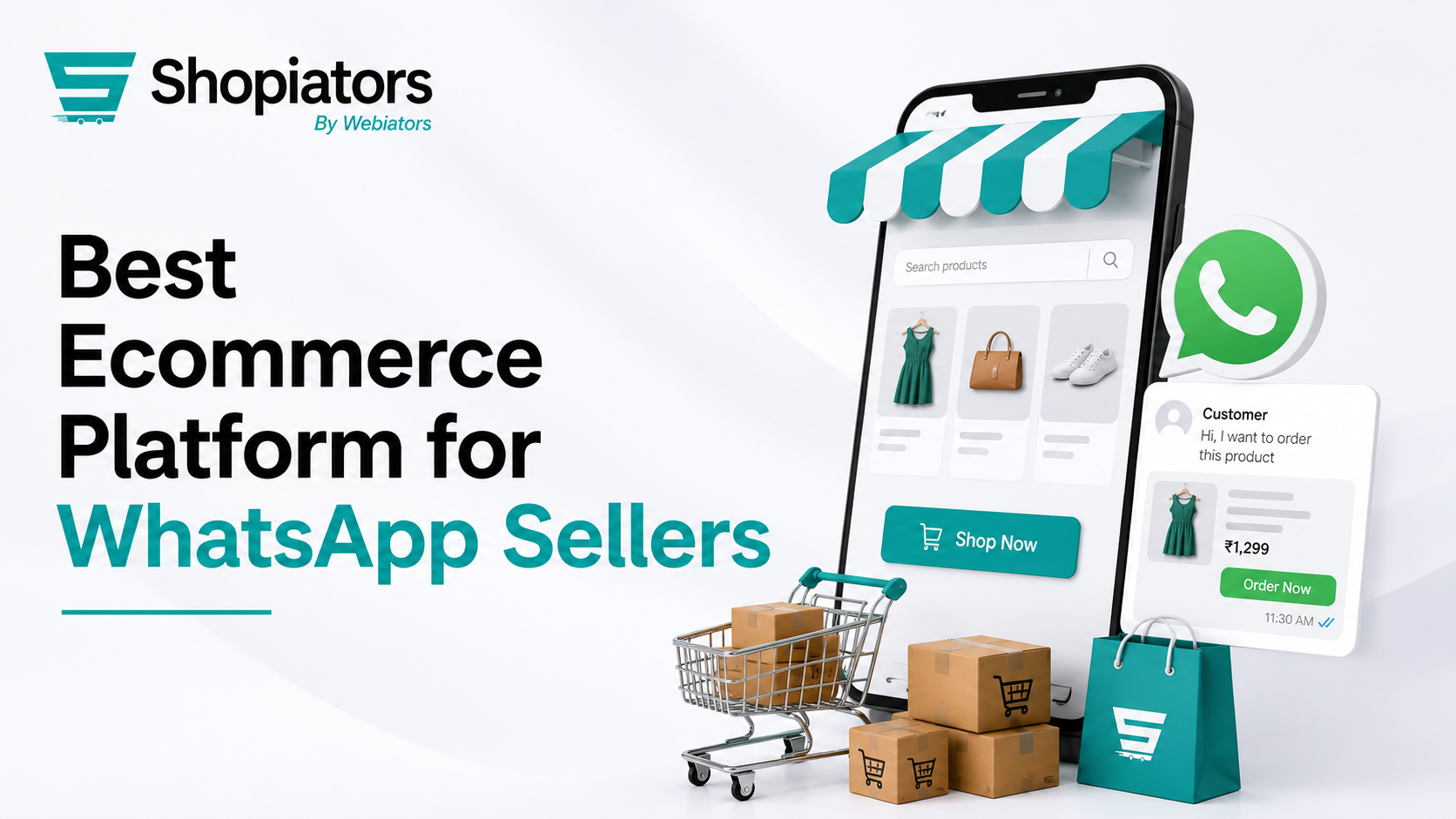
A WhatsApp notification is often the first sign that someone is interested in buying.
“Is this available?”
“Can you share more photos?”
“How much is shipping?”
For many businesses, that’s exactly how sales begin. Whether you sell clothing, skincare, electronics, handmade products, or home décor, WhatsApp has become an important channel for connecting with customers. Its familiar interface and instant messaging make conversations feel personal, which is one reason many shoppers prefer it over email.
The challenge starts when your business grows.
Managing products, payments, inventory, and customer conversations inside a chat app quickly becomes difficult. That’s where a WhatsApp ecommerce platform can make a real difference. Instead of replacing WhatsApp, it works alongside it, giving your business the tools needed to sell more efficiently while keeping customer conversations intact.
Why More Businesses Are Selling Through WhatsApp

WhatsApp has become a popular communication channel for businesses because customers already use it daily. Instead of asking buyers to download another app or fill out long forms, businesses can answer questions and guide customers through their buying journey in a familiar environment.
With WhatsApp Business, sellers can:
- Create a business profile
- Share a product catalog
- Use quick replies for common questions
- Label customer conversations
- Send automated greeting and away messages
These features are useful for small businesses and businesses that are just getting started. However, they don’t replace the broader capabilities of an ecommerce platform.
When WhatsApp Alone Stops Being Enough

Selling through chat works well when you receive a handful of orders each day.
As order volume increases, everyday tasks become more time consuming.
You might find yourself:
- Sending the same product details repeatedly
- Updating stock manually
- Checking payment screenshots
- Searching through old chats for customer information
- Tracking orders in spreadsheets
- Answering delivery questions one message at a time
None of these tasks are unusual. They’re common signs that your business has outgrown a chat-only selling process.
A dedicated ecommerce platform helps organize these operations while allowing WhatsApp to remain an important communication channel.
What Is a WhatsApp Ecommerce Platform?

A WhatsApp ecommerce platform combines your online store with WhatsApp communication.
Instead of relying only on chat, customers can browse products, place orders, make secure payments, and receive updates through a structured ecommerce system. WhatsApp continues to support customer conversations before and after the purchase.
This combination creates a smoother experience for both buyers and sellers.
Features to Look for in a WhatsApp Ecommerce Platform

Not every ecommerce platform offers the same capabilities. Before choosing one, focus on features that will support your business as it grows.
Simple Store Setup
Launching an online store shouldn’t require technical expertise.
Choose a platform that lets you add products, organize categories, customize your storefront, and start selling without a complicated setup process.
Centralized Product Management
Managing products from one dashboard saves time and reduces errors.
Look for features such as:
- Product variants
- Inventory tracking
- Category management
- Bulk product uploads
- Product image management
Keeping product information updated becomes much easier when everything is stored in one place.
Secure Payment Options
Customers expect a secure checkout experience.
A good ecommerce platform should support trusted payment gateways so buyers can complete purchases without sharing payment screenshots or waiting for manual confirmation.
Order Management
As sales increase, keeping track of orders manually becomes challenging.
A centralized order management system helps you monitor new orders, payment status, shipping progress, and completed deliveries from a single dashboard.
Mobile-Friendly Shopping Experience
Many WhatsApp users shop on their smartphones.
Your online store should load quickly, display products clearly, and provide a checkout experience that’s easy to complete on mobile devices.
Marketing and Sales Integrations
Businesses rarely depend on one sales channel forever.
A flexible ecommerce platform should support integrations with channels such as:
- Email marketing tools
- Google Shopping
This allows customers to discover your products through multiple touchpoints while keeping your business organized.
Why an Ecommerce Website Still Matters

Some sellers wonder if they even need a website when most of their customers already contact them on WhatsApp.
The answer depends on your growth goals.
An ecommerce website gives customers the freedom to explore products, compare options, and place orders at their convenience. It also creates opportunities for your business to appear in search engine results, helping new customers discover your products without relying entirely on messaging apps or social media.
If you’re comparing platforms, choosing a Best Ecommerce Website Builder can help you build a professional online store without unnecessary complexity.
How AI Is Changing Ecommerce

Running an online business involves many repetitive tasks, from writing product descriptions to organizing catalogs.
Some modern ecommerce platforms now include AI-powered features that assist with these tasks. Depending on the platform, AI may help generate product content, suggest layouts, or speed up parts of the store setup process.
If these features are important to your business, exploring an AI Ecommerce Website Builder may be worthwhile. While AI doesn’t replace business decisions, it can help reduce repetitive work and improve efficiency.
Who Can Benefit From a WhatsApp Ecommerce Platform?

A WhatsApp ecommerce platform is suitable for businesses of different sizes, including:
- Fashion brands
- Beauty and skincare businesses
- Home décor stores
- Electronics retailers
- Handmade product sellers
- Food and beverage businesses
- Local manufacturers
- D2C brands
- Wholesale businesses
If WhatsApp plays an important role in your sales process, connecting it with an ecommerce platform can help simplify daily operations.
Questions to Ask Before Choosing a Platform
Before making a decision, consider these questions:
- Is the platform easy to manage without technical knowledge?
- Can it support more products as my business grows?
- Does it provide secure payment integrations?
- Is inventory management built in?
- Can customers shop easily from mobile devices?
- Does it support marketing across multiple channels?
- Will it allow me to customize my storefront?
Choosing a platform based on your business needs today and your growth plans for tomorrow will usually provide better long-term value than selecting one based only on price.
Final Thoughts
WhatsApp has become an important part of online selling because it makes customer communication fast and convenient. It helps businesses answer questions, build trust, and guide shoppers toward a purchase.
As your business grows, though, managing everything through chat alone becomes harder.
A dedicated WhatsApp ecommerce platform helps organize products, payments, inventory, and orders while allowing WhatsApp to continue serving as a valuable communication channel. Instead of replacing the personal experience your customers appreciate, it adds the structure needed to manage your business more efficiently.
If you’re planning to build a stronger online presence, choosing an ecommerce platform that works well with your existing sales channels can make day-to-day operations simpler while creating a better shopping experience for your customers.
Read Also: Best Ecommerce Platform for Meesho Sellers
FAQs
- I already sell through WhatsApp. Do I really need an ecommerce platform?
If you’re managing only a few orders each day, WhatsApp Business may be enough. But if you’re spending hours replying to the same questions, checking payments manually, or tracking orders in spreadsheets, an ecommerce platform can help automate these tasks and make your business easier to manage.
- Can customers place orders through my website and still contact me on WhatsApp?
Yes. Many ecommerce platforms let customers browse your products, add items to their cart, and complete their purchase on your website while still giving them the option to contact you on WhatsApp for product questions, order updates, or support.
- Will I lose my existing WhatsApp customers after creating an online store?
No. Your online store is meant to complement WhatsApp, not replace it. Existing customers can continue chatting with you on WhatsApp, while new customers get a faster and more organized shopping experience through your website.
- What should I look for when choosing the best WhatsApp ecommerce platform?
Choose a platform that is easy to use, supports secure online payments, offers inventory and order management, works well on mobile devices, and can grow with your business. If you plan to expand, look for features like marketing integrations, SEO tools, and AI-powered store management.
- Can a WhatsApp ecommerce platform help me grow my business?
Yes. While no platform can guarantee sales, it can help you manage your business more efficiently, reduce manual work, provide a better shopping experience, and make it easier for customers to discover and purchase your products. This creates a stronger foundation for long-term business growth.

Yogesh
Yogesh Khasturi is the Founder of Webiators Technologies and Shopiators. With 10+ years of experience in ecommerce, Shopify, Magento, SEO, CRO, and AI-powered commerce solutions, he has helped businesses worldwide build, optimize, and scale successful online stores. He regularly shares practical insights on ecommerce growth, AI search optimization (GEO), digital commerce trends, and online business strategy.