
You don’t need a website to start selling online anymore.
Many small businesses get their first customers through Instagram. A few good product photos, engaging Reels, and consistent posting can generate inquiries and even sales. It’s one of the reasons Instagram has become an important marketing channel for brands of every size.
But here’s something I’ve noticed after working with online businesses for years: once sales become consistent, the question changes.
It stops being “Can I sell on Instagram?”
It becomes “Can Instagram support my business as it grows?”
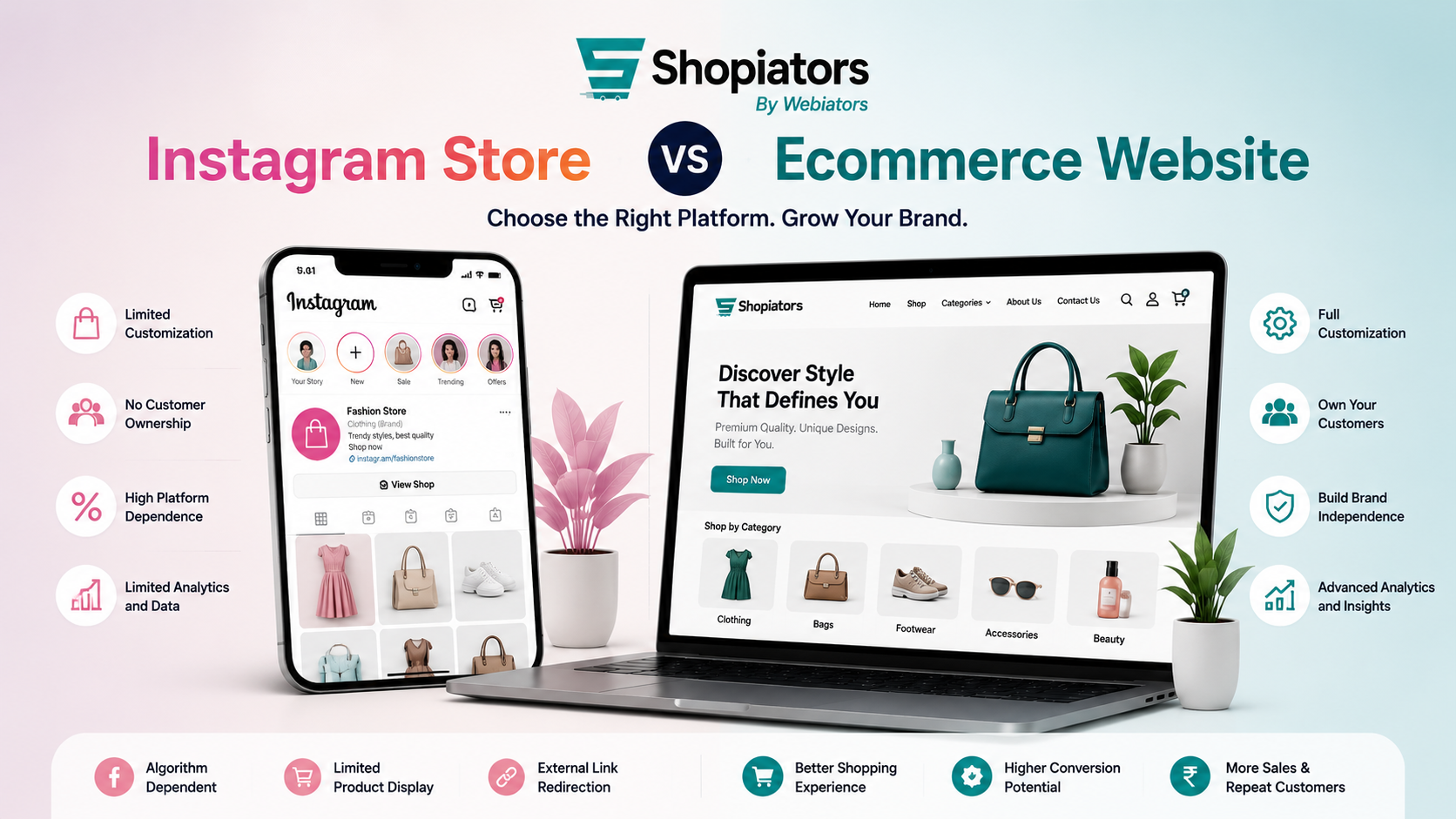
That’s where the comparison between an instagram vs ecommerce website becomes important. Both can help you sell products, but they serve different purposes. Instagram helps people discover your brand and interact with your content. An ecommerce website gives customers a dedicated place to browse products, compare options, complete purchases, and return when they’re ready to buy again.
If you’re wondering “Should I sell on Instagram or website?” or “Is Instagram enough for selling products?”, this guide will help you understand the strengths of each option and when it makes sense to use both.
Instagram Store vs Ecommerce Website: A Quick Comparison
| Feature | Instagram Store | Ecommerce Website |
| Setup | Quick to create a business profile | Takes more time but offers greater flexibility |
| Product Discovery | Strong through Reels, Stories, and posts | Depends on SEO, marketing, and direct traffic |
| Brand Customization | Limited to Instagram’s interface | Full control over branding and store design |
| Product Information | Basic descriptions | Detailed product pages with specifications, FAQs, and reviews |
| Search Visibility | Limited within search engines | Can rank in Google Search with proper SEO |
| Customer Experience | Mostly inside the Instagram app | Dedicated shopping experience from browsing to checkout |
| Business Growth | Suitable for early-stage selling and community building | Better suited for managing larger catalogs and growing operations |
Neither option is universally better. The right choice depends on your business goals, the size of your product catalog, and how you plan to reach customers.
Why So Many Businesses Start Selling on Instagram
Instagram has changed the way people discover brands.
A customer might come across a Reel showing your product in use, visit your profile, browse your posts, and decide to send you a message. That entire journey can happen within minutes.
For new businesses, that’s a huge advantage.
Some of the biggest reasons entrepreneurs choose Instagram first include:
- It’s free to create a business account.
- You can start posting products immediately.
- Reels and Stories help increase visibility.
- Customers can ask questions directly through messages.
- Building a community around your brand is relatively easy.
If you’re launching a handmade business, clothing brand, skincare line, or home décor store, Instagram can be a practical place to test your products and understand what customers like.
Many successful ecommerce brands began exactly this way.
Is Instagram Enough for Selling Products?
For some businesses, yes, especially in the beginning.
If you have a small product range and receive only a few orders each week, Instagram may be all you need to get started.
As your business grows, though, you’ll probably notice a few challenges.
Product information becomes repetitive
When customers are interested in buying, they often ask similar questions.
- Is this product available?
- What sizes do you have?
- How long does shipping take?
- What’s your return policy?
- Which payment methods do you accept?
Answering these questions individually works when you have a handful of inquiries. It becomes more time-consuming as your customer base grows.
A website allows you to organize this information in one place, making it easier for customers to find answers without waiting for a reply.
Managing orders takes more effort
Many Instagram sellers keep track of orders through direct messages, comments, spreadsheets, or messaging apps.
That approach can work for a small number of sales.
Once orders increase, keeping everything organized often requires additional tools or a dedicated ecommerce platform that brings products, payments, inventory, and orders together.
Your business depends on one platform
Instagram regularly introduces new features and updates how content is shown to users. Businesses that rely only on one platform may find that changes in reach or customer behavior affect how people discover their products.
Having a website gives customers another way to find and buy from your business, whether they arrive through search engines, paid advertising, email marketing, or direct visits.
Why Businesses Add a Website Alongside Instagram
One of the biggest misconceptions I hear is that choosing a website means giving up social media.
That’s rarely how successful ecommerce businesses operate.
Instead, they use each channel for what it does best.
Instagram is excellent for attracting attention, showcasing products, and building relationships with potential customers.
A website complements those efforts by giving customers a dedicated shopping experience.
For example, someone might discover your product through a Reel, visit your profile, click the website link, compare different products, read customer reviews, check shipping details, and place an order.
Each platform supports a different stage of the customer’s journey.
That’s why many growing brands don’t think in terms of Instagram versus website anymore. They think about how both can work together.
A Website Gives You More Control Over Your Store
One of the biggest advantages of an ecommerce website is flexibility.
Unlike a social media profile, your website lets you decide how products are organized, how collections are displayed, what information customers see, and how the checkout experience works.
You can also include features such as:
- Detailed product descriptions
- Customer reviews
- Frequently asked questions
- Size guides
- Shipping and return policies
- Product recommendations
- Blog content that attracts visitors through search engines
These features help customers make informed buying decisions while reducing the number of questions your team needs to answer manually.
Another benefit is discoverability. While public Instagram profiles can appear in Google Search, individual product pages on a well-optimized ecommerce website have a much better opportunity to rank for relevant searches. That creates another source of traffic beyond social media.
If you’re planning to build your own store, choosing the Best Ecommerce Website Builder is an important first step because it affects everything from store management to future growth.
Instagram Store vs Ecommerce Website in India
Social commerce has grown rapidly in India over the last few years. Many small businesses now use Instagram to showcase products, answer customer questions, and connect with buyers. For businesses selling fashion, handmade products, beauty items, or home décor, it’s often the first sales channel they try.
That said, customer expectations also change as a business grows.
People want to compare products, read reviews, understand shipping timelines, choose from multiple payment options, and complete their purchase without waiting for a response in direct messages. A dedicated ecommerce website makes that experience much smoother.
If your goal is to build a brand rather than simply make occasional sales, having your own online store gives you more flexibility to grow while continuing to use Instagram as a marketing channel.
When Should You Move Beyond Instagram?
There isn’t a fixed number of orders that tells you it’s time for a website. Instead, pay attention to how you’re running your business.
You should consider adding an ecommerce website if you notice situations like these:
- You’re answering the same customer questions every day.
- Your product catalog has grown beyond a few items.
- Orders are becoming difficult to track through messages.
- Customers ask if you have a website before placing an order.
- You want people to find your products through Google Search.
- You’re planning to run Google Ads or email marketing campaigns.
These aren’t signs that Instagram has stopped working. They’re signs that your business is growing.
A website helps you manage that growth more efficiently.
Instagram and a Website Work Better Together
One of the biggest mistakes I see is treating Instagram and an ecommerce website as competing options.
In reality, they serve different purposes.
Instagram helps people discover your brand through photos, videos, and creator content. It also gives customers a chance to interact with your business before making a purchase.
Your website becomes the place where shoppers can explore products in detail, compare options, check policies, and complete their order.
A typical customer journey often looks like this:
- They discover your brand through an Instagram Reel or post.
- They visit your profile to learn more.
- They click the website link.
- They browse products and read descriptions.
- They place an order through your online store.
- They return later because they already know where to shop.
This approach reduces friction for customers while giving your business multiple ways to attract and retain buyers.
Choosing the Right Ecommerce Platform
Not every ecommerce platform offers the same experience. Some are built for simple online catalogs, while others are designed to support businesses as they grow.
When comparing platforms, look beyond the homepage and consider features that matter in the long run.
Some essentials include:
- Mobile-friendly storefronts
- Secure checkout
- Multiple payment gateway integrations
- Inventory management
- Order tracking
- SEO-friendly product pages
- Marketing and discount tools
- Easy customization without technical complexity
If you’re researching an Ecommerce Platform India, choose one that matches your current needs while leaving room for future growth.
Many businesses also prefer platforms that simplify store creation. An AI Ecommerce Website Builder can help with tasks like generating product descriptions, organizing collections, or speeding up the initial setup. While AI can save time, it’s still worth reviewing the content to make sure it reflects your brand voice and product information accurately.
If you’re still planning your first online business, learning How to Start Online Store before launching can help you avoid common mistakes and make better decisions from the beginning.
Common Mistakes to Avoid
Whether you start with Instagram, a website, or both, a few mistakes can slow your growth.
Waiting too long to build a website
Some businesses continue managing everything through messages even after their order volume increases. As operations become more complex, organizing products and orders becomes harder than it needs to be.
Ignoring search traffic
Instagram is excellent for reaching people who are already using the platform. A website creates opportunities to attract customers searching on Google for products like yours.
Treating social media as your only marketing channel
Building an online business becomes more resilient when your traffic comes from multiple sources, including social media, search engines, email marketing, referrals, and repeat customers.
Diversifying how customers find your business reduces dependence on any single platform.
Final Verdict: Instagram vs Ecommerce Website
So, Instagram shop vs website, which is better?
The answer depends on where your business is today.
If you’re testing a new product, building an audience, or making your first few sales, Instagram is a practical place to begin. It offers an accessible way to showcase products, engage with customers, and understand what the market responds to.
If you’re planning to build a long-term ecommerce brand, a website becomes increasingly valuable. It gives customers a dedicated shopping experience, supports search engine visibility, and helps you organize products, orders, and business operations more effectively.
Rather than choosing one over the other, many successful businesses use both.
Instagram helps people discover the brand.
A website gives them a place to shop with confidence.
Together, they create a stronger foundation for sustainable ecommerce growth.
Read Also: How Meesho Sellers Can Build Their Own Website
FAQs
- Should I sell on Instagram or a website?
If you’re just starting, Instagram can help you reach potential customers quickly. As your business grows, adding an ecommerce website provides more control over your products, customer experience, and business operations.
- Is Instagram enough for selling products?
It can be enough for small businesses or those testing new products. However, businesses with growing order volumes often benefit from a website that organizes product information, payments, and orders in one place.
- What is the difference between an Instagram store and an ecommerce website?
An Instagram store focuses on product discovery and customer engagement within the app. An ecommerce website provides a dedicated storefront where customers can browse products, compare options, complete purchases, and access important business information.
- Why do businesses need a website with Instagram?
A website complements Instagram by giving customers another way to shop. It also supports search engine visibility, detailed product pages, and a more structured buying experience.
- Can an ecommerce website help with Google Search?
Yes. Well-optimized product and category pages can appear in Google Search, helping potential customers discover your business through relevant searches.
- Should I stop using Instagram after launching a website?
Not at all. Many successful ecommerce brands continue using Instagram for marketing, community building, and product discovery while directing interested shoppers to their website to complete purchases.

Yogesh
Yogesh Khasturi is the Founder of Webiators Technologies and Shopiators. With 10+ years of experience in ecommerce, Shopify, Magento, SEO, CRO, and AI-powered commerce solutions, he has helped businesses worldwide build, optimize, and scale successful online stores. He regularly shares practical insights on ecommerce growth, AI search optimization (GEO), digital commerce trends, and online business strategy.